

On this page
Overlay
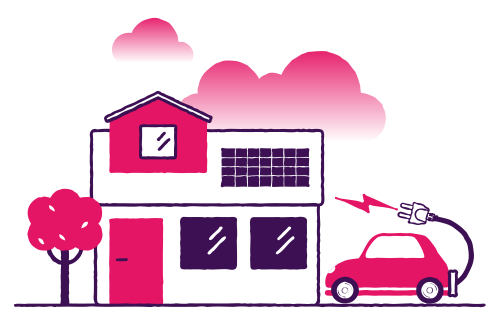
What does a home retrofit mean?
A home retrofit means making changes to your home so it uses less energy.
This can help lower your energy bills and reduce the harm your home causes to the planet.
Watch our customer retrofit videos
Greener Homes Retrofit Project
Follow a group of our customers who are took part in our Greener Homes Retrofit Project. Hear how the changes could help to reduce their energy bills and make their homes more sustainable too.

Four home retrofit steps
The steps and timing will depend on your home and what changes you want to make. In general, most people follow these steps.
1. Check how energy efficient your home is
Your Energy Performance Certificate (EPC) shows how energy efficient your home is. It also suggests ways to improve it.
2. Get a home survey
It helps to know what changes you might want to make. A trained energy assessor can visit your home and give advice that suits your property and how you use energy.
After the work is done, they may also be able to produce a new EPC for your home.
3. Find the right tradespeople
Some work needs experts, such as insulation or solar panels. It’s important to find people with the right skills.
TrustMark can help you find trained professionals in your area.
4. Pay for the work
You may be able to pay for everything yourself. If not, there are ways we may be able to help.
You can also check if you are eligible for grants or other support.
You don’t have to do everything at once. It’s best to follow the order suggested by your energy assessor. For example, insulating your home before upgrading your heating system.
Home improvement ideas for popular property types
We've identified the five most common types of property in the UK and suggested how you could make them more energy efficient. Even if you don’t find your exact house type, the tips can apply to many different types of homes. You should speak with a qualified expert to understand the changes you could make to your home.
Filter by property type:
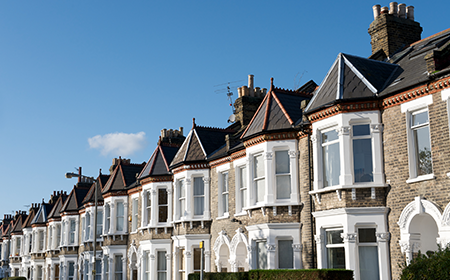
Pre-1919 Victorian mid-terrace
Typical EPC rating without improvements: D or E
For this type of home, the main suggestion is wall insulation. Old buildings can be draughty so keep the warmth in and your house will feel toastier for longer. Solar panels and solar heating are a more sustainable way to generate energy, rather than just preventing it from escaping. Or if you’re looking for an easier first step then swap to low-energy lightbulbs.
It's possible to move properties like this to an EPC rating of C or B.
How much energy could top improvements save?
- Solar panels: up to 43% per year.
- Wall insulation: up to 24% per year.
- Low-energy lighting: up to 4% per year.
Suggestions based on data from Energy Performance of Buildings Register, September 2021.
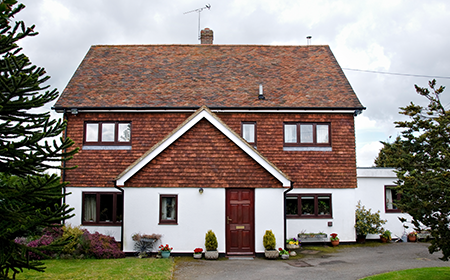
Mid-century detached
Typical EPC rating without improvements: range of B - E
These types of properties don’t lose as much heating from the walls, so focus more on how to bring energy into the house. Solar panels and low-energy lighting could be ideal for homes like this.
It's possible to move properties like this to an EPC rating of between C to A.
How much energy could top improvements save?
- Solar panels: up to 43% per year.
- Low-energy lighting: up to 4% per year.
Suggestions based on data from Energy Performance of Buildings Register, September 2021.
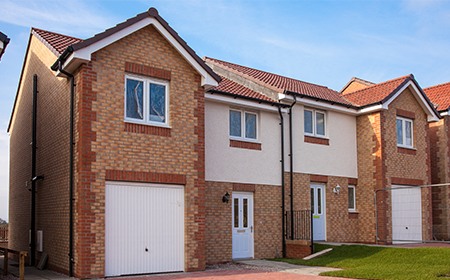
Modern semi-detached
Typical EPC rating without improvements: C or D
As a newer building you don’t have to worry so much about insulation. For a bigger change to the house you could look to solar panels and solar heating. If you want to started quickly look to switch to low-energy lighting.
It's possible to move properties like this to an EPC rating of between C to A.
How much energy could top improvements save?
- Solar panels: up tp 43% per year.
- Solar heating: up to 22% per year.
- Low energy lighting: up to 4% per year.
Suggestions based on data from Energy Performance of Buildings Register, September 2021.
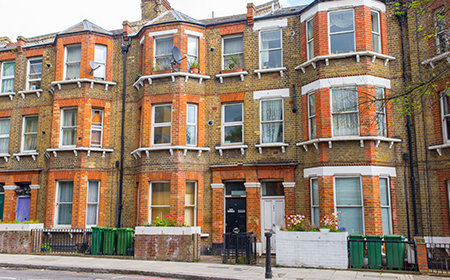
Converted flat (1920–1945)
Typical EPC rating without improvements: range of C - E
Make sure to keep the heat inside your flat with wall insulation. And swap to low-energy lighting for some extra savings that won't cost much up front.
It's possible to move properties like this to an EPC rating of C.
How much energy could top improvements save?
- Wall insulation: up to 24% per year.
- Low energy lighting: up to 4% per year.
Suggestions based on data from Energy Performance of Buildings Register, September 2021.
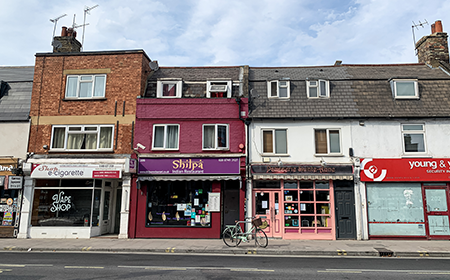
Mid-terrace (1945–1954)
Typical EPC rating without improvements: D or E
Investing in solar heating and solar panels could save you money in the long run. And for an extra energy savings boost you could switch to sustainable lightbulbs.
It's possible to move properties like this to an EPC rating of C or B.
How much energy could top improvements save?
- Solar panels: up to 43% per year.
- Solar heating: up to 22% per year.
- Low energy lighting: up to 4% per year.
Suggestions based on data from Energy Performance of Buildings Register, September 2021.
Home retrofit questions
More retrofit ideas

Energy saving home improvements
Looking for more ideas on how you could save energy within your home
Retrofit training programme
Are you a business owner?
We've partnered with the Supply Chain Sustainability School Retrofit training programme to help you understand how to make your business premises more energy efficient.